TOMORROW IS BETTER
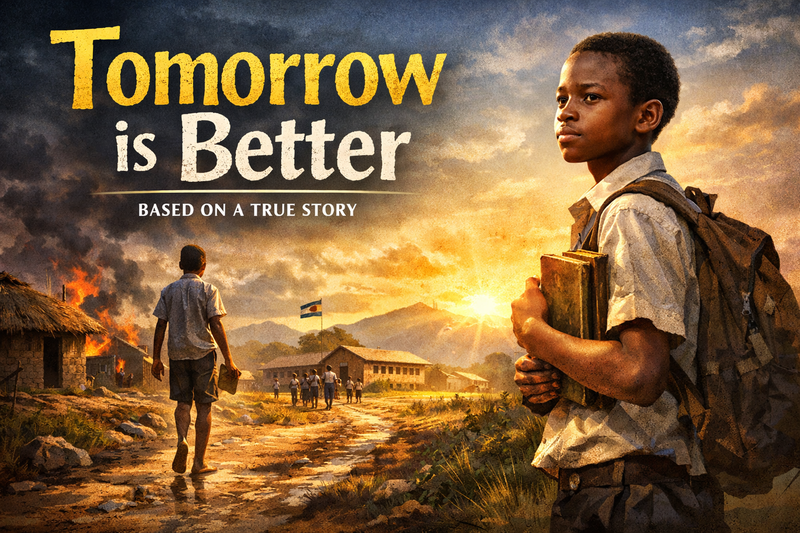

Born during the height of post-election violence, Max struggles with bullying, poverty, and the weight of school fees. Yet amidst the hardships, he discovers kindness, courage, and hope.
Tomorrow is Better is a gripping story of perseverance, pain, and resilience. Will Max rise above life’s challenges and find a brighter tomorrow?
A moving tale that proves no matter how hard today is, tomorrow can always be better.
Chapter 1: Born in the Storm
The night sky trembled with an unsettling mix of gunfire, screams, and the acrid scent of smoke rising from distant houses. In the small mud-walled house at the edge of the village, Amina clutched her swollen belly. Her body shook, not just from fear, but from the effort of protecting the family she loved. Seven children already crowded the tiny space, their faces pale and eyes wide with worry. Max, the third born, was yet to arrive.
Joseph, her husband, had been outside most of the night, helping neighbors flee the chaos. His return brought with it a mixture of relief and dread. His dark face was streaked with soot, clothes soaked from the rain. He glanced at his family with tired, anxious eyes. “Amina… he’ll be okay,” he whispered, though he did not fully believe it.
And then Max was born. His cries, tiny but determined, cut through the cacophony outside, bringing a fragile hope into the room. Amina, exhausted, pressed him to her chest, tears slipping down her cheeks. “You’ll be strong, my son,” she whispered. “Tomorrow… tomorrow will be better.”
The first night passed in a blur of fear and vigilance. Max’s siblings whispered and touched the new baby, fascinated and awed. Even the youngest, barely four, reached out a trembling hand to feel him. Joseph knelt beside his wife, gently stroking Max’s tiny fingers. “He’s perfect,” he murmured. “We will protect him, no matter what.”
By dawn, rain hammered the tin roof, turning the narrow dirt paths outside into muddy streams. The children huddled close to their mother, while Max slept peacefully, oblivious to the world’s cruelty. Amina’s heart ached with worry for his future, but she made a silent promise: I will give him everything I can. The storm will not destroy him.
The following days were a mix of survival and small victories. The village remained tense; fires had been set in nearby homes, and rumors of attacks stirred fear. Joseph worked tirelessly, helping neighbors and gathering food, while Amina, though still weak from childbirth, fetched water, cooked the little they had, and soothed the children’s fears.
Max grew slowly but steadily. Even as a newborn, he responded to the voices of his siblings, the warmth of his mother’s touch, and the rhythm of life in the small house. Miriam, the eldest, took it upon herself to care for him whenever her parents were busy. “He will grow strong,” she told the younger siblings. “Mark my words. He will survive.”
Despite the calm in their home, danger lurked outside. The village paths were muddy and treacherous, and tension hung in the air. Joseph returned one evening with a small bundle of cassava and beans—barely enough for the family to eat for a few days. Max nursed quietly, oblivious to the uncertainty around him, while Joseph whispered to Amina: “We will get through this, Amina. Our boy will see peace one day.”
Amina nodded, though her tears fell freely. She held Max closer, performing every small task with care, brushing his hair, adjusting his blankets, whispering words of love and courage. Each motion, each word, was a promise: I will protect you, no matter what.
Weeks passed, and Max began to show signs of resilience. He was alert even in sleep, responsive to voices, and calm in the presence of chaos. His siblings adored him, arguing over who would hold him first, who would rock him, who would feed him. The small house, though cramped, was alive with laughter and hope—a fragile shield against the horrors outside.
Amina often spoke to Max softly, telling him stories of heroes, clever adventurers, and people who never gave up, teaching lessons of kindness and courage. “One day,” she whispered while stroking his fine hair, “you will walk far and wide. You will see the world, and you will change it. Never forget, my son… tomorrow is better.”
By the end of the first month, the post-election violence in the village had subsided, but its lessons had been imprinted on Max, even if he could not remember them consciously. The boy’s survival amidst chaos symbolized hope for the entire family.
Max’s first month ended with cautious relief. The rain had stopped, the village slowly began rebuilding, and life cautiously returned to routine. But in that small mud house, surrounded by his family, Max had already begun to dream. Amina’s whispered mantra echoed in his tiny mind, carrying him toward a future he could not yet imagine: Tomorrow is better.
Chapter 2: Walking to School Barefooted
The first rays of the sun barely cut through the morning mist when Max stepped outside, clutching his small, tattered satchel. The dirt path to school was slick from the previous night’s rain. Mud clung to his bare feet, stones pricked his soles, and each step was a lesson in endurance. He winced with every sharp rock, but he pressed forward, determined not to be late.
“Max! Wait!” Miriam called from the doorway, holding a bundle of notebooks carefully wrapped in a cloth. “Take care of these today. Don’t lose a single page!”
Max smiled weakly, taking the precious bundle. These notebooks were more than paper—they were his lifeline. Every page held lessons, scribbles, and the hope that one day, knowledge would lift him from the hardships of his life.
The village was already stirring. Women were pounding grain, men carried bundles of firewood, and children ran errands. Some glanced at Max with sympathy, others with indifference. He had learned not to rely on anyone’s help. Each step he took toward school was his own.
By the time he reached the school compound, the first bell had already rung. Children in neat uniforms and polished shoes laughed, pushed each other, and swapped snacks. Max slipped in quietly, trying not to draw attention, but attention found him anyway.
“Look at him!” a boy whispered, pointing at Max’s bare feet and torn shorts. “Does he even know what shoes are?”
Another snickered. “I bet he eats mud for breakfast!”
Max felt his face flush. He wanted to disappear into the ground, but he remembered his mother’s words: Tomorrow is better. He found a quiet spot under the shade of a tree and opened his notebooks, carefully copying letters and numbers. Every stroke of the pencil was a rebellion against the teasing, a statement that his spirit would not be broken.
Lessons began, and Max struggled to keep pace with the other children. Hunger gnawed at him, and exhaustion weighed on his small body. Yet he absorbed every word, memorized each formula, and practiced reading aloud quietly, dreaming of a life beyond the village paths.
During recess, the teasing continued. Some boys kicked small stones at his feet; others whispered cruel jokes behind his back. Yet in this world of harshness, Max discovered small moments of kindness. Asha, a quiet girl sitting under the tree, offered him half of her maize bread.
“Here,” she said softly. “You can share it with me. I know it’s not much, but it will help.”
Max accepted gratefully. That simple gesture of kindness felt warmer than the sun cutting through the morning mist. It reminded him that even in difficult times, human compassion existed, and he held onto it like a lifeline.
After school, the journey home was no less grueling. Rain from the previous night had left puddles, and the path was slippery. Max carefully navigated each puddle, sometimes slipping but always catching himself. He walked past neighbors repairing fences, children chasing chickens, and smoke rising from cooking fires. Life continued around him, indifferent yet beautiful in its small rhythms.
At home, Max helped his mother cook, fetched water from the distant stream, and carried small bundles of firewood. The work was hard, and his small hands blistered from effort. Yet each chore reinforced a lesson he had been learning since birth: survival required courage, endurance, and determination.
Miriam often watched him in silence, her eyes filled with quiet pride. One evening, as she rubbed his tired feet, she whispered, “You’re stronger than anyone thinks, Max. Don’t let them take away your spirit.”
Max looked at his feet, muddy and bruised, and nodded. “I won’t. I will keep going. I will learn. I don’t want to be left behind.”
That night, as he lay on his straw mat with his younger siblings around him, Max thought about the day—the teasing, the mud, the hunger, and the small victories. He imagined himself in a classroom filled with books, teachers praising him, and a world where hunger and fear were distant memories.
His dreams were fragile but persistent. In the quiet of the night, Max whispered a promise to himself: I will keep walking. I will keep learning. Tomorrow is better.
Over the following weeks, Max’s routine became a rhythm of endurance and hope. Each morning, he braved the muddy path, his bare feet toughened by constant use. At school, he faced teasing and ridicule, but he also earned moments of recognition—a teacher praising his careful handwriting, a peer asking for help with a difficult problem, Asha sharing food quietly, without anyone noticing.
Slowly, he began to see progress. His ability to read, write, and solve arithmetic problems improved. Even the boys who teased him began to notice his determination. Some whispered their respect quietly; others, grudgingly, began to seek his assistance during lessons. Max learned that perseverance, patience, and a quiet dignity could slowly shift the perception of others.
Even at home, the family recognized the small victories. Miriam would smile as Max helped the younger children with lessons she had taught him. His parents, though exhausted from their work in the fields, saw a spark in him—a resilience that promised a brighter future.
As the term progressed, Max discovered that education was not just about knowledge, but also about patience, kindness, and courage. The path he walked—barefoot, muddy, full of hardship—was teaching him lessons far beyond the pages of a textbook. He realized that the smallest acts of bravery, the quiet persistence through ridicule, and the simple kindnesses extended to others were shaping his character as much as any lesson in school.
By the end of the term, Max had grown—not just in knowledge, but in spirit. The boy who had walked barefoot through mud and rain had begun to earn the quiet admiration of his teachers, peers, and even his family. Though hunger, poverty, and teasing remained, he understood something essential: endurance, learning, and kindness were far more powerful than the challenges that surrounded him.
One evening, as he walked home from school, the golden light of sunset spilled across the village paths. Max paused, looking at the hills in the distance, glistening with the last drops of rain. A sense of calm and determination settled over him. He had endured, learned, and grown. He whispered once more, a mantra that had carried him through countless challenges: Tomorrow is better.
Chapter 3: Morning Dew
The first light of dawn brought a crisp chill to the village, the air heavy with the scent of wet earth and the freshness of the morning dew. Max stepped onto the muddy path, satchel clutched tightly to his chest. His bare feet sank into the damp soil with each step, stones cutting into his soles, but he refused to complain. Every step was a lesson in resilience, every ache a reminder of the life he was determined to build.
“Max!” Miriam’s voice echoed from the doorway. She held a small bundle of cloth, neatly wrapped around his notebooks. “Take care today. Don’t let anything happen to these. They’re your treasures.”
Max smiled faintly, accepting the bundle. The notebooks contained more than lessons—they were his lifeline, a record of knowledge and hope stitched together with determination. Even the ripped pages held stories, formulas, and letters he had practiced countless times, each stroke a small triumph over the hardships of his life.
The village was awake. Women pounded grain, smoke curled from small cooking fires, and men carried heavy bundles to the fields. Children ran errands, laughter and chatter mixing with the cries of animals. Some villagers glanced at Max with pity, others with indifference. He had long learned that help was scarce, that survival depended on one’s own courage.
By the time he arrived at school, the bell had rung and children were in their classrooms, the sound of pencils scratching paper filling the air. Polished shoes tapped the floor, uniforms crisp and clean. Max found his usual spot under a large acacia tree, seating himself on a stone and opening his notebook. He began copying letters and numbers carefully, his focus absolute, as if the pencil held the power to reshape his destiny.
Miss Wanjiru, his teacher, noticed him immediately. “Max, you’re here early again,” she said, walking toward him. “Good. Don’t let the rain or mud slow you down.”
“Yes, ma’am,” Max whispered respectfully. Her acknowledgment brought a warmth he carried quietly in his heart. She was one of the few adults who saw beyond his bare feet and worn clothes, recognizing his determination instead.
Lessons began, and Max struggled to keep up. Hunger pressed at his stomach, fatigue weighed on his small frame, and the cold morning made his fingers stiff as he wrote. Yet he absorbed every word, memorized the formulas, and practiced reading aloud quietly when no one else could see. His mind reached beyond the muddy paths, imagining classrooms lined with books, sunlight streaming through windows, and teachers praising his efforts.
Recess brought no respite. Teasing and ridicule followed him everywhere. Kelvin and his friends laughed at his torn shorts, poked at him with sticks, and whispered cruel jokes. But Max had learned to endure. He recalled Miriam’s words: Don’t let them take your light. Every act of cruelty only strengthened his resolve.
Amid the teasing, there were moments of kindness. Asha, always quiet and observant, slipped him a small piece of bread. “Here, share it with me,” she said softly, her eyes reflecting the understanding she could not express in words. Max accepted gratefully, savoring both the food and the acknowledgment of friendship. These tiny gestures were like sunlight in the fog, reminders that even in hardship, compassion could exist.
After school, the journey home was treacherous. The path was slick with mud, scattered with stones, and littered with small branches from the previous night’s storm. Max navigated carefully, slipping once but regaining his balance, his mind focused on home and the warmth awaiting him there. Along the way, he passed neighbors repairing fences, children chasing chickens, and smoke rising from the tiny kitchens. Life went on around him, indifferent yet alive, and he drew lessons from its rhythm.
At home, chores awaited. He fetched water from the distant stream, carried firewood for cooking, and helped his younger siblings with their homework. Every task, no matter how small, became a lesson in patience, responsibility, and resilience. Miriam often watched him, pride softening her gaze. One evening, she knelt beside him, rubbing his tired feet.
“You’re learning so much, Max,” she whispered. “Even in the mud, even under their teasing, you’re becoming stronger. One day, they’ll see what I see.”
Max looked down at his mud-streaked feet, bruised from the constant walking, and nodded. “I won’t stop,” he said quietly. “I will learn. I will keep going. I want more than this life.”
The days passed, blending together into a rhythm of struggle, learning, and small victories. Max memorized letters, solved arithmetic problems, and practiced reading aloud. Each correct answer, each careful stroke of his pencil, was a quiet triumph over adversity. Even Kelvin’s mocking seemed to lose its power; Max’s determination created a shield no words could pierce.
Evening brought reflection. Max lay on his straw mat, the younger children sleeping beside him. He thought about the mud, the stones, the teasing, the hunger, and the small victories. He imagined classrooms filled with books, teachers encouraging him, and a world beyond the village paths. His dreams were fragile, like the thin paper of his notebooks, but they persisted, strengthened by his determination and the acts of kindness he experienced each day.
As night fell, Max whispered a promise to himself: I will endure. I will learn. I will rise. Tomorrow is better.
Weeks turned into months. His routine became a rhythm of survival and hope. Each morning, he faced the muddy path, the teasing classmates, and the hunger that gnawed at him. Each evening, he returned home to chores, family, and small moments of peace. Slowly, he began to see results: his handwriting improved, his arithmetic skills sharpened, and his teachers noticed his quiet diligence.
The boys who had teased him began to watch differently. Some whispered their admiration, others sought his help with lessons. Max discovered that persistence, patience, and quiet strength could change the way others perceived him. Even at home, the family noticed his growth. Miriam smiled as he helped teach younger siblings; Amina and Joseph admired the courage in his eyes.
By the end of the school term, Max had grown in knowledge and character. He had learned that endurance, learning, and kindness were more powerful than ridicule, hunger, or poverty. He walked the muddy paths home with a quiet confidence, glancing at the hills bathed in the golden sunset. He whispered again the words that had carried him through so many hardships: Tomorrow is better.
Chapter 4: Shadows of Bullying
School was no longer just a place of learning; for Max, it had become a battlefield. Every morning, he faced the muddy path with bare feet and a heavy satchel, knowing that once he reached the classroom, challenges would not end. Kelvin and his group of friends had made it their mission to belittle and torment him. Their cruel laughter echoed across the schoolyard like a constant reminder that life was not fair.
“You’ll never amount to anything, barefoot boy!” Kelvin shouted one morning, shoving Max as he tried to pass through a narrow doorway.
Max stumbled but did not fall. His eyes, steady and calm, met Kelvin’s with quiet defiance. “I’ll be fine,” he whispered under his breath, remembering Miriam’s advice: Don’t let them take your light.
The teasing was relentless. Stones were kicked at his feet, books knocked from his hands, and cruel whispers followed him wherever he went. Even in class, when Max answered questions correctly, some students rolled their eyes or muttered under their breath. But Max was learning something vital: strength was not measured by retaliation but by patience, courage, and resilience.
During one particularly harsh day, Kelvin and his friends cornered Max near the school latrine. “Look at him,” one sneered. “Does he even know how to read?”
Max’s stomach churned, but he refused to cry. Instead, he straightened his back and held his satchel close. “Yes, I do,” he said quietly, his voice steady despite the fear curling in his chest. “And one day, I’ll be better than all of you.”
The words surprised his tormentors. They had expected fear, tears, or anger—but not courage. Kelvin scoffed and walked away, leaving Max standing in the shadows, heart pounding but spirit intact.
Not every encounter with bullying ended in silence. Sometimes, Max found subtle ways to defend himself without confrontation. He excelled in lessons, helped struggling classmates, and quietly showed kindness to younger children. These acts slowly earned him respect among peers. One day, a younger boy who had been shoved into a puddle by Kelvin thanked him. Max smiled and helped him up, ignoring the watching bullies.
“You saved him,” a quiet voice whispered. It was Asha.
“Yes,” Max replied softly. “It’s not about showing strength. It’s about doing what’s right.”
Through these small acts, Max discovered that courage was not loud or boastful. It was quiet, steady, and unwavering. The respect he earned was subtle but real, building a foundation that bullying could not shake.
The school days were long, filled with lessons in reading, arithmetic, and writing, but Max also learned lessons beyond the classroom. He learned to read people, anticipate cruelty, and act with intelligence and care. He discovered that kindness could disarm cruelty and that patience often yielded more than confrontation.
Yet bullying was never easy to endure. Some days, it left him shaken and exhausted. On those days, Max would retreat to a quiet corner under a tree, breathing deeply and recalling his mother’s mantra: Tomorrow is better. He imagined a world where education and perseverance mattered more than appearance, wealth, or shoes. Each day of ridicule became a test, and each act of endurance strengthened his resolve.
At home, Max’s family provided solace. Miriam noticed the bruises on his arms and the dirt under his nails. “Don’t let them define you,” she said one evening. “You’re stronger than they are, and one day, they’ll see it.”
Even his parents, burdened by poverty and hard work, recognized his courage. “Max,” his father said quietly one night, “you are becoming someone very special. Never forget, even when the world is cruel, you have your mind, your heart, and your dreams.”
As the weeks passed, Max’s reputation began to shift. The bullies noticed that he was unshakable, patient, and clever. Some whispered their admiration; others sought his help with lessons. Max learned to navigate the social currents of school life, understanding that survival required both intelligence and empathy.
One afternoon, a serious incident occurred. Kelvin shoved a younger boy into a puddle and laughed as he struggled to stand. Max immediately intervened, helping the boy to his feet and offering words of encouragement. The watching children fell silent. Even Kelvin’s friends seemed uncertain.
“You’re always saving people,” one muttered.
Max simply nodded. “It’s the right thing to do,” he replied, the conviction in his voice leaving no room for argument.
This moment marked a turning point. Some classmates began to see Max as a quiet leader, someone who could stand strong without cruelty. Respect began to replace ridicule, and small alliances formed. Max discovered that strength, courage, and kindness were more powerful than fear and mockery.
Even outside the schoolyard, Max carried the lessons he had learned. Walking home through muddy paths, he helped younger children cross slippery stretches. He carried heavy bundles for neighbors in need. Every act of service, no matter how small, reinforced the values he was building: resilience, empathy, and patience.
By the end of the term, Max had changed. He was no longer just the barefoot boy who endured ridicule. He had become someone quietly respected, admired for his intellect, his courage, and his kindness. Bullying still existed, but it no longer defined him. Max had learned that endurance, patience, and small acts of courage could transform even the harshest challenges into opportunities for growth.
That night, as he lay on his straw mat, Max reflected on the day’s events. He remembered the pain of ridicule, the sting of injustice, and the moments of quiet triumph. He whispered to himself once more, reinforcing the lesson that had guided him since birth: Tomorrow is better.
The shadows of bullying had not disappeared entirely, but Max had discovered something far more powerful. Strength was not in avoiding hardship—it was in facing it, learning from it, and using it to grow. The boy who walked barefoot through mud and endured ridicule had begun to shine, not through pride or boasting, but through courage, kindness, and unwavering perseverance.
Chapter 5: The Struggle for School Fees
Education was more than a dream for Max—it was a lifeline. Yet every term brought a familiar worry: school fees. His family, struggling to make ends meet, could barely provide enough food, let alone tuition. The letters from school listing the fees were like shadows looming over Max’s fragile hope, and every morning he faced the reality that the path to learning was not free.
At home, the mood was tense. Amina sat on a low stool, her hands wringing a worn cloth as she explained the situation. “Max, your father and I will do everything we can, but this term… we may not manage it all.”
Max nodded silently, though the worry gnawed at him. He had grown used to hardship, but he had also learned that despair solved nothing. “I’ll help, Mama,” he said, his voice firm. “I can find a way.”
Joseph, his father, laid a hand on his shoulder. “You are strong, son. But remember, no matter what happens, we love you. We’ll figure this out together.”
Max wasted no time. The next morning, he set out before sunrise, bare feet striking the cold dirt path. He began small: running errands for neighbors, carrying firewood, fetching water from the stream. Each shilling earned was precious, each task a brick in the foundation of his education.
The village was harsh, and work was scarce. At the small market, merchants were cautious with their coins, offering little to those who had nothing to trade. Max, however, refused to be discouraged. He offered to sweep the shop floors, help unload sacks of grain, and carry goods to the far edges of the village. By evening, he returned home exhausted, palms blistered and legs aching, but with a few coins jingling in his satchel.
Still, it was never enough. Max sat on a stone outside his home one evening, staring at the horizon. The sun dipped behind the hills, painting the sky in shades of orange and gold. “Mama… Papa…” he whispered, “I will make this work. I must.”
Amina approached, wrapping her arms around him. “I know you will, Max. You’ve always found a way.” Her eyes, tired yet full of hope, met his. “Remember, even small steps matter.”
Max smiled faintly. That night, he spread out his small earnings, counting them carefully. Each coin represented hours of toil, yet it also represented progress. The thought that he could contribute to his own education filled him with pride, even if it was a struggle.
Weeks passed. Max’s efforts became routine. He woke before dawn, walked barefoot to neighbors’ homes, and performed tasks ranging from carrying water to guiding livestock. Some villagers were kind, giving him extra coins or food in appreciation. Others were dismissive, indifferent to his hard work. Yet Max never wavered.
One afternoon, while collecting firewood at the edge of the forest, he stumbled upon a politician visiting the village. She noticed the small boy struggling to carry heavy branches, sweat dripping down his face, yet determination shining in his eyes. She approached him, curious.
“Hello, young man,” she said gently. “Why are you working so hard?”
Max, though surprised, bowed respectfully. “I… I want to go to school, ma’am. My family cannot pay the fees, so I help where I can.”
The politician studied him for a moment. She had seen countless children in need, but there was something different about Max—the quiet dignity, the determination, the refusal to complain despite hardship. She smiled. “You have a brave heart. I think we can help.”
True to her word, she arranged a small scholarship for Max. The relief that washed over him was indescribable. For the first time in months, he felt the weight of worry lift slightly. He clutched the letter confirming his fees had been paid and ran home to show his family.
Amina cried tears of joy, holding him tightly. “See, Max? Your courage and effort brought this to you. Never stop believing.”
Joseph nodded, pride evident in his eyes. “You have worked for this, son. And now, your future is clearer because of your determination.”
Even with the scholarship, life remained challenging. Max continued to help around the house, assist neighbors, and support his siblings in small ways. But the burden of uncertainty had lessened, replaced by hope. Every morning he walked barefoot to school with renewed energy, every lesson a step toward the dreams he had nurtured in his heart.
Yet the struggle for school fees taught him more than just perseverance. It taught him empathy. Max understood the difficulties of others, the unseen burdens families carried, and the small victories that meant the world to those in need. He began quietly helping younger children carry books, share food, and study lessons. His kindness was never ostentatious—it was patient, subtle, and consistent.
Through hardship, Max discovered that education was not just about acquiring knowledge. It was about courage, resilience, and integrity. Every coin earned, every chore completed, every hardship faced became a lesson in life.
By the end of the term, Max had learned an invaluable truth: while luck and opportunity might open doors, perseverance, hard work, and kindness could keep those doors open. He had transformed struggle into strength, despair into hope, and poverty into determination.
One evening, as he walked home from the market with his small earnings, the golden sun sinking behind the hills, Max whispered to himself the words that had guided him since birth: Tomorrow is better.
The village around him, once threatening and harsh, now felt alive with possibilities. Max had realized that while life was full of challenges, it also offered moments of hope, unexpected kindness, and opportunities to rise.
Chapter 6: Moments of Kindness
Even amidst hardship, Max found small ways to make life better—not just for himself, but for those around him. The village, with its dusty paths, worn houses, and constant struggle, often felt harsh and unforgiving, but Max had learned that kindness was a light that could pierce even the darkest corners.
It started with small gestures. When a younger child dropped his books in the mud, Max would pause on his way home from school to help him gather the pages. “Here, take these,” he would say quietly, smiling to calm the tears welling in the child’s eyes. “It’s okay. Don’t worry. We’ll clean them later.”
Word spread slowly through the village. People began noticing the barefoot boy who carried extra food for those hungrier than himself, who offered help without hesitation, and who never mocked or judged others despite his own hardships.
One evening, Max found a small kitten trapped in a bush. Its cries were soft but desperate. Max crouched down, carefully untangling the branches and lifting the tiny creature into his arms. “You’re safe now,” he whispered, stroking its fur gently. A small smile lit up his face. In that simple act, he felt a warmth that no hardship could steal—a connection to life, fragile and precious.
At school, Max’s kindness extended to his classmates. He noticed when someone struggled with arithmetic or reading and would quietly offer guidance. “Try it this way,” he would suggest patiently, showing them the steps without condescension. Asha often followed him, helping younger children practice letters and numbers. Together, they became a quiet force of encouragement, lifting the spirits of those who felt lost or overlooked.
Not all acts of kindness were noticed immediately. Sometimes, Max went days without acknowledgment. But he never sought praise. He had learned that kindness, like courage, was its own reward. Every small act created ripples, reaching farther than he could imagine.
One day, a new student arrived—a shy boy named Daniel, who had moved from a distant village. Daniel’s clothes were worn, his shoes threadbare, and he kept his eyes down, afraid of ridicule. Max noticed immediately. He approached him gently, offering a small piece of his lunch.
“Here, take this,” Max said softly. “You don’t have to sit alone. You can join us.”
Daniel’s eyes widened in surprise, but a smile slowly appeared. For the first time since arriving, he felt welcomed. Max guided him to their usual spot under the acacia tree, where Asha and other friends were waiting. That small gesture changed Daniel’s life, helping him find confidence and a sense of belonging.
At home, Max’s family noticed the change in him. Amina watched as he helped his younger siblings with lessons, gently correcting mistakes and encouraging effort. Joseph observed Max sharing small portions of food with a neighbor who had none. Miriam, his older sister, smiled with pride. “You’re becoming the kind of person who changes lives without even realizing it,” she whispered.
Max’s acts of kindness were not limited to humans. One morning, he noticed birds struggling to drink from a nearly dried-up puddle. He carefully poured water into a shallow dish he found and watched as the birds drank, chirping their gratitude. It was a small gesture, but in it, Max understood a larger truth: compassion was universal, extending beyond people to all living beings.
Even when facing hardship himself—barefooted walks to school, teasing from classmates, hunger, and exhaustion—Max continued to help others. He discovered that true strength was not only surviving but lifting others as he climbed.
One particularly harsh day, Kelvin mocked Daniel in front of the entire class. Daniel’s eyes filled with tears, and the boy looked ready to retreat. Max stepped forward calmly. “Leave him alone,” he said quietly but firmly. “You have no right to make someone feel small.”
Kelvin sneered but didn’t push further. The quiet authority in Max’s voice, combined with his history of helping others, had earned him respect. Daniel looked up at Max with gratitude, understanding that he had found an ally in a world that often seemed cruel.
Max’s reputation as a kind, reliable, and brave boy grew slowly but steadily. Teachers noticed his patience, peers began to approach him for help, and even the bullies began to reconsider their actions. Acts of kindness, Max learned, had a power far greater than anger or ridicule. They changed people subtly, planting seeds of respect and admiration.
At home, Max continued to contribute. He helped Amina with chores, guided his siblings in their lessons, and shared small treats with neighbors in need. Even small acts—like sweeping a neighbor’s floor or carrying a heavy water container—became opportunities to make life lighter for others.
One evening, after a particularly long day, Max sat quietly under the fading sunlight. The village hummed around him—the laughter of children, the soft chatter of neighbors, and the distant clatter of livestock. He reflected on the day: the people he had helped, the gratitude he had seen in their eyes, and the small but significant impact he had made.
Amina approached, placing a hand on his shoulder. “Max,” she said softly, “you have a heart bigger than anyone else’s I know. Remember, the world needs people like you—people who lift others while walking their own hard path.”
Max nodded, a quiet determination in his gaze. “I’ll keep trying, Mama. I know the world is hard, but… if I can make even a little difference, it’s worth it.”
As night fell and Max lay on his straw mat, he thought about the many small acts of kindness he had witnessed that day—his own, his family’s, and those of others around him. Each act was a thread in a larger tapestry, a proof that compassion could survive even in hardship.
He whispered once more the words that had guided him since birth: Tomorrow is better.
Even in the harshest conditions, Max had discovered a truth deeper than survival: courage, perseverance, and kindness could change lives, including his own. The village, once a place of struggle and despair, now felt alive with possibilities. Max knew that as long as he continued to act with compassion and determination, no obstacle—no hardship, no bullying, no hunger—could ever truly defeat him.
Chapter 7: Dreams in the Darkness
Night had fallen over the village, casting long shadows across the mud paths and thatched roofs. The sky was a deep indigo, sprinkled with stars that seemed to watch quietly over the sleeping homes. Max lay on his straw mat, his body tired from the day’s chores and walks, but his mind refused to rest. Darkness brought not fear, but dreams—vivid and impossible visions of a life beyond the village, a world waiting for him to discover it.
He imagined classrooms filled with sunlight, books stacked neatly on polished desks, and teachers who praised effort rather than appearance. He pictured himself raising his hand confidently, answering questions with clarity and precision, the pride of his family reflected in every glance. In these dreams, Max was no longer the barefoot boy walking muddy paths; he was a young man full of potential, respected, and capable of changing the lives of those around him.
Yet even in these dreams, the weight of reality lingered. Hunger, fatigue, and the teasing from school still pressed on his mind. Sometimes, he would wake with a start, the echoes of harsh words from Kelvin or the ache in his feet reminding him that dreams alone could not create change. He pressed his hands to his chest and whispered, Tomorrow is better. The words acted as both shield and compass, guiding him through the darkness toward hope.
Max had always loved stories, especially the ones his mother told him when he was younger. Tales of brave adventurers, clever heroes, and people who defied the odds filled his mind with possibilities. As he lay in the dim glow of the small lantern in his home, he would replay these stories, imagining himself in similar situations—solving problems, helping others, and walking a path that led far from hardship.
Sometimes, he wrote in the small notebook he kept under his pillow, scribbling ideas for stories, notes about school lessons, or even sketches of people he admired. These nights of quiet creation were sacred, a sanctuary where his imagination could roam freely. The act of writing gave him power over his world, a way to control at least a small part of life when everything else seemed uncertain.
One particularly cold night, Max huddled under his thin blanket and reflected on the lessons he had learned. He thought about the kindness he had shown others, the small victories at school, and the days he had worked tirelessly to help his family. Each memory was a building block, a foundation for the dreams that blossomed in his heart. “One day,” he whispered into the dark, “I will make a difference. I will rise above this, and I will bring others with me.”
Even his siblings began to notice the change in him. Miriam often found him late at night, notebook open, scribbling away. “You think too much,” she would tease gently, but her eyes betrayed pride. She understood that Max was not just surviving—he was growing, shaping himself into someone who could endure more than hardship alone.
At school, Max’s diligence had begun to pay off. Lessons that had once seemed impossible now came more easily. Numbers that had tripped him up before now made sense; words that had seemed foreign now felt familiar. Every correct answer and carefully written sentence was a small victory, a proof that persistence and effort could defy circumstance.
Still, Max never lost sight of the bigger picture. Education was not only for himself—it was a bridge to a brighter future for his family, his friends, and perhaps one day, the entire village. He imagined standing in a classroom, teaching younger children who struggled as he had, showing them that even the darkest nights could give way to light.
The village itself often inspired his dreams. At dawn, mist would rise over the hills, painting the world in soft shades of gray and gold. Max would watch from the mud paths, imagining faraway places he had never seen: cities bustling with life, rivers that sparkled under the sun, and fields so vast they seemed to touch the sky. These visions became part of his nightly dreams, blending hope and determination into an unstoppable force within him.
Even fear could not dampen his spirit. The sounds of distant gunfire, the whisper of danger, and the uncertainty of tomorrow all became part of his inner narrative. He transformed fear into motivation, reminding himself that struggle was not an end, but a beginning. Each hardship sharpened his mind, strengthened his resolve, and made his dreams feel even more attainable.
Max also began to teach himself quietly, using the little he had. He practiced arithmetic with stones on the ground, wrote sentences in the dirt, and memorized lessons from his worn notebooks. Each effort was a promise—to himself and to those who believed in him—that he would not be defeated by circumstance.
Even in moments of loneliness, Max found solace in imagination. He pictured conversations with leaders he admired, problem-solving in ways he had only read about, and helping communities with solutions born from his own mind. His dreams were never idle—they were practice, preparation, and rehearsal for the future he intended to build.
One night, as the village slept, Max looked at the stars and made a silent vow: I will rise. I will learn. I will bring hope to those who have none. Tomorrow is better. The words were no longer just a mantra; they were a declaration, an oath to himself, his family, and the world he hoped to shape.
By the end of the week, Max felt a quiet confidence he had never known before. The darkness no longer frightened him; it was a canvas on which he painted his dreams. Every challenge he faced during the day—hunger, teasing, long walks, exhaustion—was fuel for his imagination. And every night, he returned to his straw mat with the certainty that his efforts were not in vain.
Through his dreams, Max learned patience, creativity, and the importance of hope. He understood that education, kindness, and perseverance were not separate—they were intertwined, forming a path that could lift him and others from hardship. And in the silence of the night, he continued to whisper, with unwavering faith: Tomorrow is better.
Chapter 8: Recognition
The morning air was crisp, carrying with it a sense of anticipation. Today was no ordinary day; it was the day the results of the KCPE exams would be announced. Max woke early, heart pounding, barely able to contain a mix of excitement and fear. He had worked tirelessly—walking barefoot to school, memorizing lessons, helping his siblings, and enduring every hardship—and now, the outcome would be revealed.
Amina stirred in the small hut, noticing Max’s restless pacing. “Calm down, my son,” she said softly, placing a comforting hand on his shoulder. “No matter what the result, I am proud of you. You have already achieved more than many could dream of.”
Max nodded, swallowing hard. “I know, Mama… but I hope… I just hope it will make a difference.”
Joseph entered, his face stern but tender. “Max, courage is not measured by a number. But I believe in you. Whatever happens, you have made us proud.”
With those words echoing in his mind, Max set out for school. The village was alive with chatter and curiosity. Everyone had heard about the boy who walked barefoot to school every day, the boy who had endured teasing, hunger, and hardship, yet remained diligent and kind. Some villagers whispered about him with admiration; others watched with cautious hope, wondering if his determination would finally bear fruit.
At school, students and teachers gathered in the small hall. Miss Wanjiru’s face was calm but radiant with pride. “Today,” she announced, “we celebrate the results of our hard work. Let us honor those who have shown perseverance, courage, and dedication.”
Max’s stomach twisted as names were called. When his name was announced, a hush fell over the room. “Max, third born of Amina and Joseph, has achieved top marks in the class!”
For a moment, Max felt stunned. Then, as the applause erupted, his chest swelled with pride. Tears pricked his eyes—not from relief alone, but from the realization that every struggle, every step along the muddy paths, had led him to this moment.
His classmates, many of whom had teased him in the past, now looked at him differently. Some nodded respectfully; others whispered congratulations. Kelvin, standing at the back, avoided eye contact, a quiet acknowledgment of Max’s achievement evident in his stance.
Outside the school, villagers began to gather. Word of Max’s success had spread quickly. Neighbors, merchants, and friends came forward, clapping him on the back, praising his diligence, and offering congratulations. Max was overwhelmed, yet he smiled, keeping his humility intact. He knew this recognition was not just for him—it was for his family, his teachers, and everyone who had supported him through hardships.
Later that day, a politician who had once visited the village approached Max. She remembered the small boy who had worked tirelessly to earn his own school fees, carrying heavy bundles with determination and dignity. “Max,” she said warmly, “you have proven that courage and perseverance can defy any circumstance. We are proud of you.”
The acknowledgment from someone outside his immediate circle was extraordinary. Max felt a rush of hope. Perhaps his dreams of a brighter future were not as distant as they once seemed. Perhaps his efforts, sacrifices, and dedication could indeed change the course of his life.
At home, the family celebrated quietly but joyfully. Amina prepared a modest meal, and Miriam helped Max polish his only pair of shoes—a rare gift for a boy who had walked barefoot for so long. Joseph looked at him with a mixture of pride and awe. “You have done more than survive, Max. You have shown what it means to rise above adversity.”
That night, as Max lay on his straw mat, he reflected on the journey that had brought him here. He thought about the mornings drenched in dew, the long walks to school, the teasing, the hunger, and the countless hours of effort. Each memory was a testament to his resilience and determination. He whispered softly, as he had done countless times before: Tomorrow is better.
Recognition, Max realized, was not merely about praise or admiration. It was a mirror reflecting the strength and courage within him. It showed him that his choices, actions, and character mattered—that perseverance, kindness, and diligence could overcome the harshest circumstances.
The days that followed brought further acknowledgment. Teachers praised him openly, encouraging younger students to follow his example. Villagers began to see education in a new light, inspired by the boy who had walked barefoot through hardship to achieve success. Some even offered to help other children, motivated by Max’s story.
Max, however, remained humble. He understood that recognition was not an endpoint but a stepping stone. It was a reminder of the potential within him, the possibilities that could unfold if he continued to work hard and act with integrity.
He also remembered the kindness he had received—the small gestures from Asha, the support of his family, the scholarship provided by the politician. Recognition was sweeter because it was intertwined with gratitude, respect, and the knowledge that no one achieves greatness alone.
As he walked the village paths once more, this time with his modest shoes protecting his feet, Max felt a quiet sense of purpose. The muddy paths were no longer obstacles—they were reminders of how far he had come. He smiled at younger children struggling to carry books or fetch water, offering them gentle words of encouragement. He knew that one day, he could help them as others had helped him.
That night, under the same indigo sky dotted with stars, Max made a new promise to himself. I will not stop here. I will keep learning, keep helping, and keep dreaming. I will make a difference, not just for me, but for everyone who believes in tomorrow.
In that moment, the barefoot boy of yesterday had become a young man recognized for his courage, intelligence, and integrity. And while recognition brought pride and hope, it also brought responsibility—the responsibility to continue walking the path of perseverance, kindness, and unwavering determination.
Max closed his eyes, feeling the weight of both achievement and duty. He whispered once more, the words now resonating deeper than ever: Tomorrow is better.
Chapter 9: Facing New Challenges
Success brought a glow to Max’s life, but it also brought new challenges—ones he had not anticipated. While his KCPE results had earned him recognition and opportunities, the path ahead was not easy. Secondary school awaited, with more demanding lessons, longer walks, and the need to adapt to a world even bigger and more complex than the village he had known.
The first day of secondary school dawned crisp and bright. Max adjusted the straps of his small backpack, feeling the weight of both books and expectations pressing on his shoulders. The school was larger, with many students he had never seen before, some with polished shoes, neat uniforms, and confident voices. Max’s bare beginnings and struggles were far from the polished world around him.
He felt a twinge of nervousness. The fear of being overlooked, misunderstood, or ridiculed whispered in his mind. But he took a deep breath, recalling the lessons he had learned in the village: perseverance, kindness, and patience could overcome almost any hardship.
The classrooms were more crowded, the lessons more advanced, and the teachers stricter. At first, Max struggled to keep pace. Algebraic equations twisted his thoughts, literature passages demanded careful analysis, and science experiments tested both his understanding and his creativity. He often stayed behind after class, asking questions, rereading notes, and practicing problems under the dim light of the lantern at home.
Even walking between classes became a challenge. Long corridors, crowded hallways, and students who whispered about newcomers created a social maze that Max had to navigate carefully. Some students were curious and friendly, while others, jealous or dismissive, tested him with subtle mockery.
Kelvin’s older brother, who happened to be at the same school, gave Max a sharp glance one morning. “So you made it here, huh?” he said, voice dripping with skepticism. “We’ll see how long you last.”
Max nodded politely, refusing to rise to provocation. He had learned that dignity and restraint often spoke louder than words or confrontation. Tomorrow is better, he whispered to himself, steadying his courage.
Despite the challenges, Max found new sources of support. Teachers noticed his diligence and quiet determination. They offered guidance, extra exercises, and encouragement. Peers who had seen his character in primary school became allies, helping him adjust and reminding him that his past struggles had forged resilience few others possessed.
Yet new challenges were not limited to academics. Max discovered that success could attract envy and skepticism. Some classmates questioned how a boy from a struggling village could excel, subtly implying that his achievements were unusual or undeserved. Max learned to respond with calm, letting results speak for themselves and refusing to engage in petty arguments.
At home, life remained demanding. Miriam relied on him for household chores, and Amina depended on him to help younger siblings with their studies. Even with recognition and opportunity, Max had to balance schoolwork with family responsibilities. Many nights, he studied under the faint glow of a lantern while siblings slept, stretching himself thin but never wavering in his resolve.
During these months, Max also encountered internal struggles. The weight of expectations, both his own and those of others, pressed heavily on him. Sometimes, doubts crept in: Am I good enough? Can I keep up? Will I ever rise beyond these challenges?
But each time, he recalled the path he had walked—the muddy roads to school, the teasing, the hunger, the small victories. He remembered the acts of kindness that had nurtured him and the belief in a better tomorrow that had carried him through darkness. With each memory, his resolve strengthened.
Max also learned the importance of strategy. He studied his lessons methodically, prioritized tasks, and sought guidance when needed. He realized that hard work alone was not enough; wisdom, planning, and self-discipline were equally vital. Slowly, he found a rhythm, balancing schoolwork, chores, and personal growth.
Friendship became a source of strength. Asha remained a constant presence, helping him navigate both social and academic challenges. Together, they encouraged younger students, shared notes, and built a small community of trust within the larger, intimidating school environment. Max learned that collaboration and support were not signs of weakness but tools to overcome new trials.
Yet challenges tested more than intellect or endurance. Max faced moral dilemmas, witnessing peers cheat on assignments, succumb to peer pressure, or act selfishly. He had to decide whether to intervene, remain silent, or quietly guide them toward better choices. Each decision shaped his character, reinforcing the values he had cultivated since childhood.
One rainy afternoon, Max found a younger student struggling to complete an assignment. Other classmates laughed, but Max knelt beside the boy, guiding him patiently. “It’s okay,” Max said softly. “You can do this. Take it step by step.” The boy’s eyes lit up with gratitude, and Max felt a quiet satisfaction, knowing he had made a difference.
These moments reinforced a truth Max had always known: challenges were not just obstacles—they were opportunities to grow, to lead, and to help others. Each difficulty, whether academic, social, or moral, was a chance to strengthen his mind, heart, and spirit.
By the end of the first term, Max had adjusted to the new environment. He faced each challenge with courage, creativity, and patience. Though the path was not easy, he had learned that resilience, humility, and kindness were more powerful than fear, envy, or difficulty.
Even as new challenges emerged—longer walks, heavier workloads, and increased expectations—Max carried them with a quiet confidence. He had faced hardship before and had triumphed. Now, he faced the unknown with the same mantra that had guided him through every trial: Tomorrow is better.
As he walked home one evening, the sun setting behind the distant hills, Max reflected on the lessons of the term. He understood that life’s challenges would never cease, but they could be navigated with patience, wisdom, and courage. Each step, no matter how difficult, was part of the journey toward a brighter future.
That night, as he lay on his straw mat, exhausted but satisfied, Max whispered once more: Tomorrow is better. The words were no longer just hope—they were certainty, a shield against adversity and a promise of perseverance that would guide him through every challenge yet to come.
Chapter 10: The Dawn of Hope
The first light of dawn painted the village in hues of gold and pink. Mist lingered over the hills, and the soft cooing of birds filled the air. Max stood outside his home, bare feet touching the cold earth, taking in the scene. He had walked many paths to reach this point—muddy roads, long treks to school, hardships, and relentless perseverance—but the view before him felt like the beginning of something new, something brighter.
The news had spread through the village like wildfire: Max, the barefoot boy who had endured teasing, hunger, and countless obstacles, had been offered a scholarship to a prestigious secondary school in the city. The recognition was not just about academic excellence; it was an acknowledgment of his courage, resilience, and integrity.
Amina held his hand tightly, tears of joy streaming down her face. “Max, you’ve made it. All your hard work, your patience, your sacrifices—they have brought you here.”
Joseph nodded, pride shining in his eyes. “This is just the start, son. You have proven that nothing can stop a determined heart.”
Max smiled, a mixture of relief, pride, and quiet humility filling him. “I… I couldn’t have done it without all of you,” he whispered. “Mama, Papa, Miriam… you believed in me when others did not. This is ours, not just mine.”
Even Asha, standing nearby, beamed with pride. “You inspire everyone, Max. You’ve shown that courage, kindness, and perseverance can change lives.”
As the day unfolded, villagers gathered to celebrate quietly, bringing small gifts, words of encouragement, and prayers for his success. Max, however, remained humble. He understood that this was not the end—it was a new beginning, a chance to rise higher and to continue lifting others as he climbed.
The journey to the city school was long and unfamiliar. Max carried his small bag tightly, filled with neatly folded clothes, notebooks, and pencils. Every mile reminded him of the countless walks he had endured through mud, dew, and scorching sun. Yet this journey was different; it was a path paved with hope, opportunity, and the promise of a brighter future.
Upon arrival, the city school seemed enormous. Towering buildings, neatly paved paths, and students in crisp uniforms created a world far beyond the village Max had known. He felt a twinge of apprehension, a whisper of doubt—could he belong here, among students from wealthier families and more privileged backgrounds?
But Max’s past had prepared him for this moment. He recalled every lesson in endurance, every act of kindness, every night spent dreaming under the stars. Courage was not the absence of fear; it was the strength to move forward despite it. And so, he stepped confidently into the school grounds, his head held high, heart filled with determination.
Classrooms were challenging. Lessons moved faster, teachers were stricter, and expectations were higher. Max often stayed late, practicing mathematics, reading aloud, and writing essays under dim light. The city environment presented temptations and distractions, but he remained focused, remembering the sacrifices of his family and the mantra that had guided him through every trial: Tomorrow is better.
Friendships formed slowly but meaningfully. Max connected with students who shared his drive and integrity. Together, they studied, encouraged one another, and navigated the complexities of secondary school. Through collaboration, Max learned that leadership was not about authority, but about guiding others with empathy and wisdom.
Even amidst success, Max never forgot the village. He wrote letters home, shared small gifts with siblings, and sent news of his progress to encourage other children. He became a bridge between worlds—the village that shaped him and the city that offered opportunity.
The months passed, and Max’s diligence bore fruit. He excelled in class, participated in debates, and became a source of inspiration for both students and teachers. He understood that education was more than grades—it was the key to change, empowerment, and the ability to lift others.
One evening, Max walked along the school grounds, watching the sun dip behind the distant skyline. He reflected on his journey—the morning dew, the teasing, the hunger, the long walks, the acts of kindness, and the moments of perseverance. Every hardship had been a lesson, every struggle a stepping stone toward growth.
He whispered softly into the wind: Tomorrow is better. The words were no longer a simple mantra—they were a promise fulfilled and a commitment to continue striving, learning, and helping others.
Max realized that hope was not a fleeting feeling but a choice—a decision to face each day with courage, to act with integrity, and to lift others as he rose. His life was no longer defined solely by struggle but by purpose, resilience, and the possibilities that lay ahead.
By the time night fell, Max felt a quiet contentment. He lay on his bed, imagining the future: helping children in villages like his own, contributing to communities in need, and inspiring others to believe that hardship did not define destiny. He understood that life would continue to bring challenges, but he now possessed the strength, wisdom, and heart to face them.
The village he had left behind was never far from his thoughts. He remembered the smiles of neighbors, the encouragement from teachers, the laughter and kindness of friends, and the unwavering support of his family. Max knew that his journey was theirs as well, a shared testament to perseverance and belief in a brighter tomorrow.
As he closed his eyes, Max whispered one final time: Tomorrow is better. And with that, the boy who had walked barefoot through mud, endured teasing, faced hunger, and carried hope in the darkest nights drifted into sleep—not as a boy defined by struggle, but as a young man defined by courage, kindness, and the promise of a new dawn.
END
Dear Reader,
Max’s journey is a story of hope, courage, and perseverance. Life will often challenge you, push you to your limits, and test your dreams—but remember this: every struggle is a step forward, every act of kindness matters, and every effort you make shapes your tomorrow.
No matter where you start, or how difficult the path may seem, believe in yourself. Let compassion guide you, resilience strengthen you, and hope light your way. Just like Max, you have the power to rise above obstacles, inspire others, and create a brighter future—not just for yourself, but for those around you.
Hold on, keep dreaming, and never forget: Tomorrow is Better.
— Ryan K. Bett
Comments
No comments yet. Be the first to comment!