CHALK DUST DREAMS
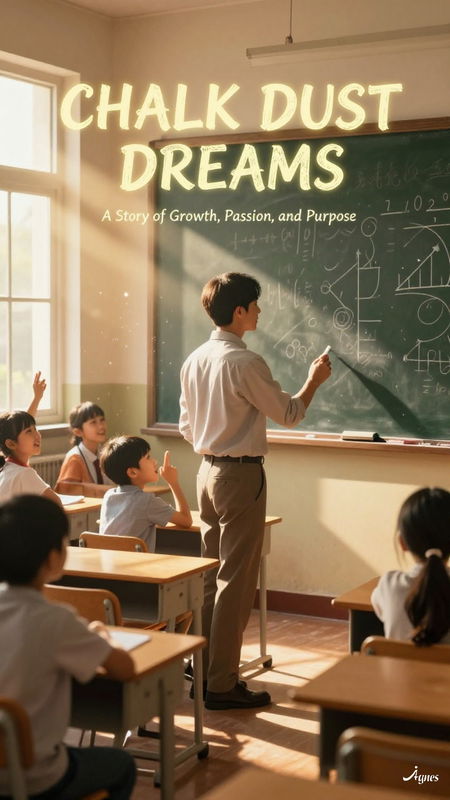

Chapter 1: The First Bell
Daniel Kibet stood just outside the wooden classroom door, gripping a stack of neatly arranged papers so tightly that the edges began to curl under his fingers. The corridor was alive with noise—students laughing, footsteps echoing, desks scraping—but to him, everything sounded distant, as if he were underwater.
This was it. His first day. His first class.
He inhaled deeply, trying to steady his nerves. He had imagined this moment so many times back in college—standing confidently before a class, delivering lessons with ease, inspiring young minds. But now, standing here in reality, his confidence wavered.
What if they don’t listen?
What if I forget everything?
What if I fail?
The loud ringing of the school bell cut through his thoughts like a command. It was time.
Daniel pushed the door open.
Inside, about thirty students sat at wooden desks arranged in neat rows. Some were chatting, others flipping through books, a few simply staring at the door. The moment he entered, the room fell into a sudden, almost unnatural silence.
Thirty pairs of eyes locked onto him.
For a brief second, his throat went dry.
Then, unexpectedly, a girl in the front row smiled.
“Good morning, sir!”
The rest of the class followed in chorus, “Good morning, sir!”
Daniel blinked, caught off guard by the warmth in their voices. Something inside him loosened.
“G-good morning,” he replied, his voice slightly shaky but sincere. “Please… you can sit.”
They were already seated, and a ripple of quiet laughter spread across the room. Daniel chuckled nervously, rubbing the back of his neck.
Great start, he thought.
He walked to the blackboard, picked up a piece of chalk, and wrote slowly:
MR. DANIEL KIBET
The chalk squeaked loudly, making him wince.
He turned to face the class again. “I’ll be your teacher this term.”
A boy in the back raised his hand immediately. “Sir, is this your first time teaching?”
Daniel hesitated. He could lie. Pretend confidence. But something told him honesty would serve him better.
“Yes,” he said. “It is.”
The class exchanged glances—and then, surprisingly, smiles.
“Don’t worry, sir,” another student said. “We will behave.”
That made the entire class burst into laughter, including Daniel.
In that moment, the tension dissolved.
He began with introductions. One by one, students stood, stating their names. Some spoke confidently, others shyly, a few adding little comments that sparked laughter.
Daniel listened carefully, repeating each name in his mind. He wanted to remember them—not just as students, but as individuals.
Then came his turn.
“I became a teacher,” he said slowly, “because I believe learning can change lives. Not just passing exams—but understanding the world, and your place in it.”
The room grew quiet again—but this time, it felt different. Not tense, but attentive.
Encouraged, Daniel moved into his first lesson. His hands trembled slightly as he flipped open his notes. He stuck closely to his plan, reading more than speaking, occasionally glancing up to check if they were following.
Some students nodded. Others looked confused.
He stumbled once, lost his place, and had to pause. His heart pounded again.
But then—something unexpected happened.
A student raised her hand.
“Sir, can you explain that again?”
Her tone wasn’t mocking—it was genuine.
Daniel smiled. “Of course.”
This time, he explained it in simpler words, using an example from everyday life.
Heads began to nod.
Something shifted.
He wasn’t just reading anymore—he was teaching.
As the lesson continued, he found himself relaxing. He moved around the class, asked questions, even cracked a small joke that earned a few chuckles.
Before he knew it, the bell rang again.
Time had flown.
“Sir!” one student called out as he gathered his papers. “That was nice.”
Another added, “You teach differently.”
Daniel paused, surprised. “Differently… good or bad?”
“Good,” they said almost in unison.
He smiled—this time, not nervously, but genuinely.
As he walked out of the classroom, the corridor noise returned, but now it felt lighter, brighter.
He hadn’t been perfect. He had stumbled, hesitated, doubted himself.
But he had started.
And sometimes, starting is the hardest part.
Chapter 2: Names and Faces
The first week passed like a whirlwind for Daniel.
Each morning, he arrived early, determined to prepare thoroughly. His lesson plans became his safety net—carefully written, underlined, and revised. He rehearsed explanations in his head, anticipating questions, imagining how the class might respond.
But no amount of preparation could fully control what happened inside the classroom.
On Tuesday, he accidentally wrote the wrong date on the board—twice.
“Sir,” a student giggled, “today is not Monday.”
Daniel turned, looked at the board, and burst into laughter along with them.
“Well,” he said, “I guess I’m still stuck in yesterday.”
Moments like these could have embarrassed him—but instead, they became bridges between him and his students.
He began to realize something important: perfection wasn’t necessary.
Connection was.
Learning their names, however, proved to be a challenge.
There was Amina, who always sat in front and asked thoughtful questions.
Brian, who leaned back in his chair and spoke only when called upon.
Lucy, who laughed easily and brightened the room.
And Peter—there were three Peters.
“Peter…?” Daniel would say, and three hands would go up.
The class found this endlessly amusing.
To solve it, he gave them nicknames—Peter A, Peter B, and “Tall Peter.” The last one protested at first, but eventually accepted it with a grin.
By midweek, Daniel made it his mission to call every student by name without hesitation.
It wasn’t just about memory—it was about respect.
One afternoon, as he handed back assignments, he called out, “Brian.”
The boy in the back looked up, surprised.
Daniel noticed the flicker of recognition in his eyes—as if being seen mattered more than the paper itself.
And maybe it did.
The classroom slowly transformed into a place of familiarity.
Students began greeting him outside class.
“Good morning, sir!”
“Hello, sir!”
“Are we having a lesson today, sir?”
Their energy was contagious.
Still, not everything went smoothly.
On Thursday, his lesson completely fell apart.
He tried explaining a complex topic, but the class looked lost. He repeated himself, added more details, and somehow made it even more confusing.
Silence filled the room.
Daniel felt the familiar wave of doubt creeping in.
Then Lucy raised her hand.
“Sir… I don’t understand anything.”
A few students laughed—but Daniel didn’t.
Instead, he nodded. “Thank you for saying that.”
He paused, then closed his notebook.
“Let’s try something different.”
He drew a simple diagram on the board. Then another. He used examples from their daily lives—things they could see and relate to.
Slowly, the confusion began to lift.
“Ahhh,” someone said.
“I get it now!” another added.
Relief washed over him.
That day taught him a powerful lesson: teaching wasn’t about showing how much he knew—it was about helping others understand.
By Friday, something had changed.
When Daniel walked into the classroom, the students didn’t just see a teacher—they saw their teacher.
And he, in turn, no longer saw a group of strangers.
He saw individuals.
Stories.
Potential.
As the final bell of the week rang, the students packed their bags reluctantly.
“Sir,” Amina said, “next week… can you tell us another story like Monday?”
Daniel smiled.
“Next week,” he said, “we’ll make learning even better.”
As he watched them leave, laughter echoing down the corridor, he felt something settle within him.
Confidence—not loud or dramatic, but steady and real.
He was still learning. Still growing.
But he was no longer afraid.
Chapter 3: The First Lesson That Worked
By the second week, Daniel had begun to find his rhythm—but it wasn’t steady yet. Some lessons still felt forced, like he was trying to fit himself into a version of a “perfect teacher” he had imagined in college.
That version wasn’t working.
On Monday morning, he stood before the class again, chalk in hand, staring at the topic written on the board. It was one of those lessons—long, structured, and filled with definitions.
He could already feel the energy dropping.
Students leaned on desks. A few stared out the window. One yawned loudly.
Daniel paused.
Something inside him said, This isn’t it.
He slowly put the chalk down.
“Let me ask you something,” he said.
The class stirred slightly.
“What if I told you… this topic is actually a story?”
Now they were listening.
“A story?” Lucy asked, curious.
“Yes,” Daniel nodded. “A story about a village… not so different from yours.”
He began to speak—not reading, not reciting—but storytelling.
He described a farmer struggling with a problem connected to the lesson. He gave the characters names. He added emotion, humor, and small dramatic pauses.
The classroom changed.
Students leaned forward. Brian stopped slouching. Even the quiet ones were watching him closely.
“Then what happened, sir?” someone asked eagerly.
Daniel smiled. They’re in.
He continued, weaving the lesson into the story so naturally that they didn’t even realize they were learning.
When he finally stopped, the room was silent.
The bell rang.
No one moved.
“Sir…” Amina said softly, “you didn’t finish.”
Daniel looked at the clock, surprised.
“We’ll continue tomorrow,” he said.
A collective groan filled the room.
For the first time, students were disappointed the lesson had ended.
As Daniel walked out, his heart felt lighter than ever.
That day, he understood something powerful:
Teaching wasn’t about delivering information.
It was about creating moments.
Chapter 4: Chalk and Creativity
After his storytelling success, Daniel became more daring.
He no longer confined himself to textbooks alone.
One morning, he walked into class carrying colored chalk—something most teachers rarely used.
“Today,” he said, “we’re going to see this lesson.”
Curiosity sparked immediately.
He began drawing on the board—not perfect art, but clear enough to tell a story. Diagrams turned into pictures. Concepts turned into visual journeys.
Students watched in fascination.
“Sir, you can draw!” Peter B exclaimed.
Daniel laughed. “Not really—but I can try.”
Soon, the class became part of the lesson.
“Who wants to come and add to this?” he asked.
Hands shot up.
Lucy came first, drawing something slightly crooked—but everyone cheered anyway.
Even Brian hesitated, then slowly raised his hand.
When he stood at the board, the class went quiet.
He drew carefully, concentrating.
When he finished, Daniel nodded. “That’s perfect.”
Brian’s face lit up—just slightly, but enough.
From that day, lessons became interactive.
Sometimes Daniel turned topics into small competitions.
Other times, he divided the class into groups.
Occasionally, he even acted out scenarios—earning laughter and applause.
The classroom was no longer silent and rigid.
It was alive.
One afternoon, a quiet girl named Faith raised her hand for the first time.
“Sir,” she said softly, “I understand now.”
Daniel paused.
Four simple words—but they struck deeply.
Because behind them was effort, courage, and trust.
And in that moment, Daniel realized:
This wasn’t just teaching.
This was transformation.
Chapter 5: The Difficult Student
Not every story in the classroom was easy.
Brian remained a challenge.
Though he had shown small signs of change, he often slipped back into silence. He rarely completed assignments and avoided eye contact.
Other teachers had labeled him “difficult.”
Daniel wasn’t convinced.
One afternoon, after class, Daniel noticed Brian lingering behind.
“Brian,” he called gently, “can we talk?”
The boy hesitated, then nodded.
They sat quietly for a moment.
“You’re smart,” Daniel said. “I can see it. But something is holding you back.”
Brian looked away.
Silence stretched.
Daniel didn’t push.
Finally, Brian spoke.
“School… doesn’t matter much,” he muttered.
“Why not?”
Brian shrugged. “Things at home… are not good.”
Daniel listened—really listened.
He didn’t interrupt. He didn’t judge.
He just sat there, giving Brian space to speak.
And slowly, the walls came down.
From that day, Daniel approached Brian differently.
He encouraged him quietly. Praised small efforts. Gave him simple tasks he could succeed in.
And slowly—almost invisibly—Brian began to change.
One day, he raised his hand.
Just once.
But it was enough.
Because progress isn’t always loud.
Sometimes, it’s a whisper.
Chapter 6: The Staffroom Reality
The staffroom was a different world.
Unlike the lively classroom, it carried a heavy, tired energy.
Teachers sat in worn chairs, sipping tea, marking piles of books.
“New teacher, huh?” one asked Daniel.
“Yes,” he replied.
The teacher chuckled. “Enjoy the energy while it lasts.”
Another added, “You’ll get used to it. It becomes routine.”
Daniel listened quietly.
Some complained about students. Others about salaries, workload, or lack of support.
It wasn’t negativity—it was exhaustion.
For a moment, doubt crept in.
Will I become like this?
But later that day, when he stepped back into his classroom and saw the students waiting, something shifted.
Their energy pulled him back.
Their curiosity reminded him why he started.
The staffroom showed him reality.
But the classroom showed him purpose.
And Daniel chose to hold onto that.
Chapter 7: The First Success
Midterm exams arrived faster than expected.
The school grew tense. Students studied harder. Teachers revised constantly.
Daniel worried.
Had he done enough?
When the results came, he felt nervous holding the papers.
Then something caught his eye.
One student—Faith—had improved dramatically.
From near failing… to one of the highest scores.
When he handed her paper, she stared at it in disbelief.
“Sir… is this mine?”
“Yes,” Daniel smiled.
Her eyes filled with tears—not of sadness, but pride.
“I did it.”
Those words stayed with him.
Later, more students approached him.
“Sir, I passed!”
“Sir, I improved!”
Each success felt like his own.
Because teaching isn’t just about results.
It’s about growth.
And that day, Daniel realized:
He wasn’t just teaching lessons.
He was shaping futures.
Chapter 8: Rainy Day Lessons
The rain came suddenly.
Dark clouds covered the sky, and within minutes, heavy drops pounded the roof.
Then—the power went out.
The classroom dimmed.
“No lights… no books,” Peter A said.
Daniel looked around.
This could be a wasted lesson.
Or something else.
He smiled.
“Close your books,” he said.
The students looked surprised.
“Today,” he continued, “we’re doing something different.”
They leaned in.
“I want each of you to tell me… your dream.”
Silence.
Then Lucy raised her hand. “I want to be a doctor.”
“Why?”
“To help people.”
Others followed.
“A pilot.”
“A teacher.”
“A business owner.”
“A footballer.”
Even Brian spoke.
“I want… a better life.”
The room grew quiet.
The rain continued outside—but inside, something powerful was happening.
Daniel listened to every dream.
He didn’t correct, didn’t judge.
He simply said, “It’s possible.”
That day, no syllabus was covered.
But something more important was learned:
Hope.
Chapter 9: Doubt and Determination
Not every day felt like progress.
By the third month, the excitement that had once carried Daniel through each morning began to mix with something heavier—fatigue.
The early mornings felt longer.
The lesson planning felt endless.
And the small mistakes felt louder than before.
One particular day stood out.
Daniel had spent hours preparing what he believed would be a perfect lesson. He had structured it carefully, added examples, even included a small activity to make it engaging.
But when he delivered it… it failed.
Completely.
The students didn’t respond.
The activity fell flat.
Even his explanations felt confusing.
He could see it in their eyes—they weren’t connecting.
A wave of frustration hit him.
What went wrong?
After class, he sat alone, staring at his notes.
For the first time since he started teaching, doubt crept in deeply.
Maybe I’m not as good as I thought.
Maybe I’m not meant for this.
The staffroom didn’t help that day.
One teacher sighed loudly while marking papers. “Some classes just don’t care,” he said.
Another added, “You can try all you want—it doesn’t change much.”
Daniel listened, quieter than usual.
Their words lingered in his mind.
That evening, he walked home slowly, replaying the lesson again and again. Every mistake felt magnified.
But then—something interrupted his thoughts.
“Sir!”
He turned.
It was Faith, running toward him, slightly out of breath.
“Sir,” she said, smiling, “today’s lesson… I didn’t understand at first. But when I went home, I tried again—and now I get it!”
Daniel blinked.
“You do?”
“Yes!” she nodded excitedly. “Thank you, sir.”
She waved and ran off before he could respond.
Daniel stood there for a moment, still.
The lesson hadn’t been perfect.
It hadn’t even been good—at least not in his eyes.
But it had reached someone.
And maybe that was enough.
The next day, he walked back into class with a different mindset.
Not to be perfect.
But to be persistent.
He began reviewing the previous lesson, this time explaining it more simply, asking more questions, listening more closely.
Slowly, understanding spread.
Students nodded. Some even smiled.
At the end of the class, Brian raised his hand.
“Sir… I understand now.”
Daniel smiled.
Doubt didn’t disappear completely—but it no longer controlled him.
Because he had learned something crucial:
A bad lesson doesn’t define a teacher.
Giving up does.
And Daniel wasn’t ready to give up.
Chapter 10: The Teacher He Became
Months passed.
What once felt unfamiliar had now become routine—but not in a dull way.
In a confident way.
Daniel no longer stood outside the classroom door with fear in his chest. Instead, he walked in with calm purpose.
“Good morning, class.”
“Good morning, sir!” came the energetic reply.
The room felt different now—not just because of the students, but because of him.
He moved naturally as he taught, no longer tied to his notes. He told stories, asked questions, laughed, and listened.
The classroom had become more than a place of instruction.
It was a space of growth.
One afternoon, as he paused during a lesson, he looked around the room.
Amina was explaining something to her desk partner.
Lucy was taking notes with focus.
Faith was confidently answering a question.
Brian—once silent and distant—was raising his hand.
Daniel felt something shift inside him.
Pride.
Not in himself alone—but in them.
After class, as students packed their bags, Brian approached him.
“Sir,” he said, a little awkwardly, “I just wanted to say… thank you.”
Daniel smiled. “For what?”
Brian hesitated. “For not giving up on me.”
For a moment, Daniel didn’t know what to say.
Then he simply replied, “You didn’t give up on yourself.”
Brian nodded, then walked away.
That small exchange stayed with Daniel long after the classroom emptied.
Later that evening, he returned to the now-quiet classroom. The desks were still, the board half-erased, the air calm.
He walked slowly to the front and picked up a piece of chalk.
For a moment, he just stood there.
Then he wrote:
“Keep going.”
He stepped back and looked at it.
When he had first started, he thought teaching was about knowledge, control, and perfection.
But now he understood the truth.
Teaching was about:
Patience.
Connection.
Belief.
It was about seeing potential before it was visible.
About encouraging effort before success.
About showing up—even on the hard days.
Daniel smiled softly.
He wasn’t the nervous young teacher from the first day anymore.
He had grown.
Learned.
Changed.
He had become someone who didn’t just teach lessons—
But inspired lives.
As he turned off the classroom lights and stepped outside, the setting sun cast a warm glow across the school grounds.
The same place that once felt intimidating now felt like home.
And as he walked away, one thought stayed with him:
This was only the beginning.
Final Message to the Reader
Every journey starts with uncertainty. Every dream begins with doubt.
But growth doesn’t come from being perfect—it comes from showing up, trying again, and believing in the impact of small moments.
A teacher may not always see the results immediately…
But the seeds they plant can last a lifetime.

Comments
No comments yet. Be the first to comment!